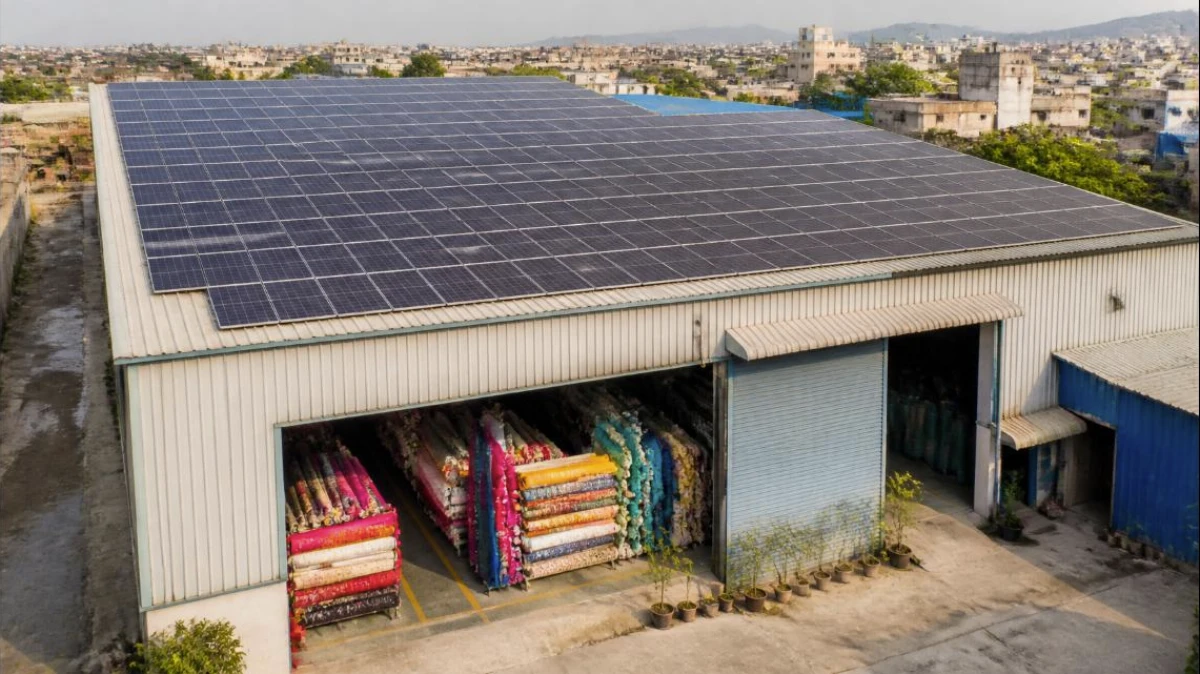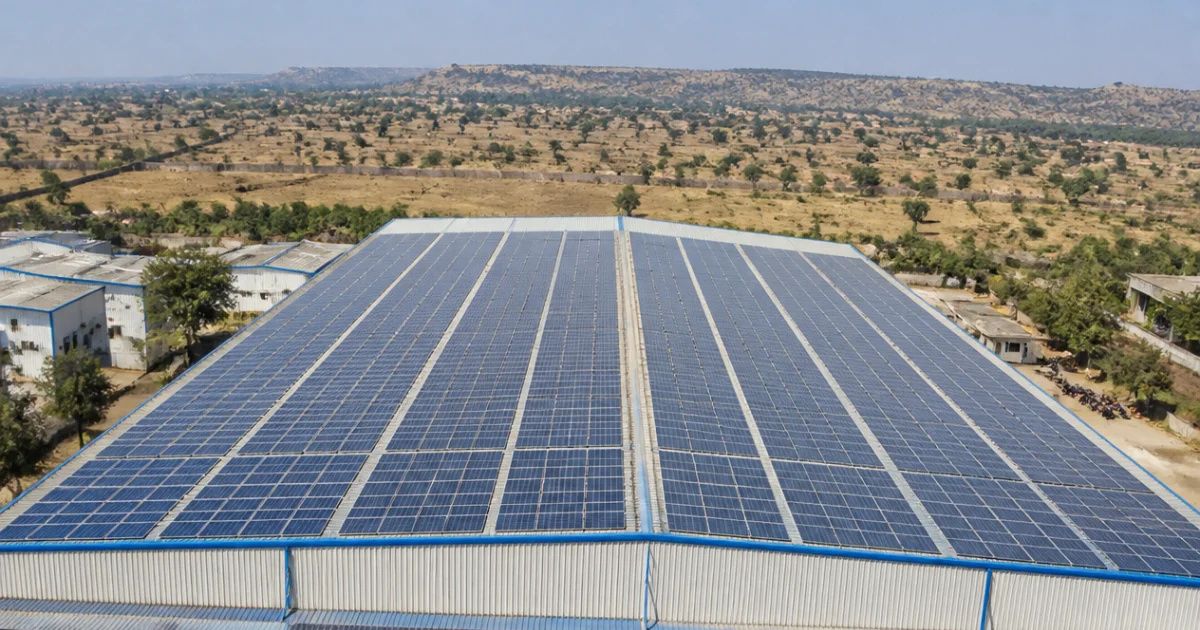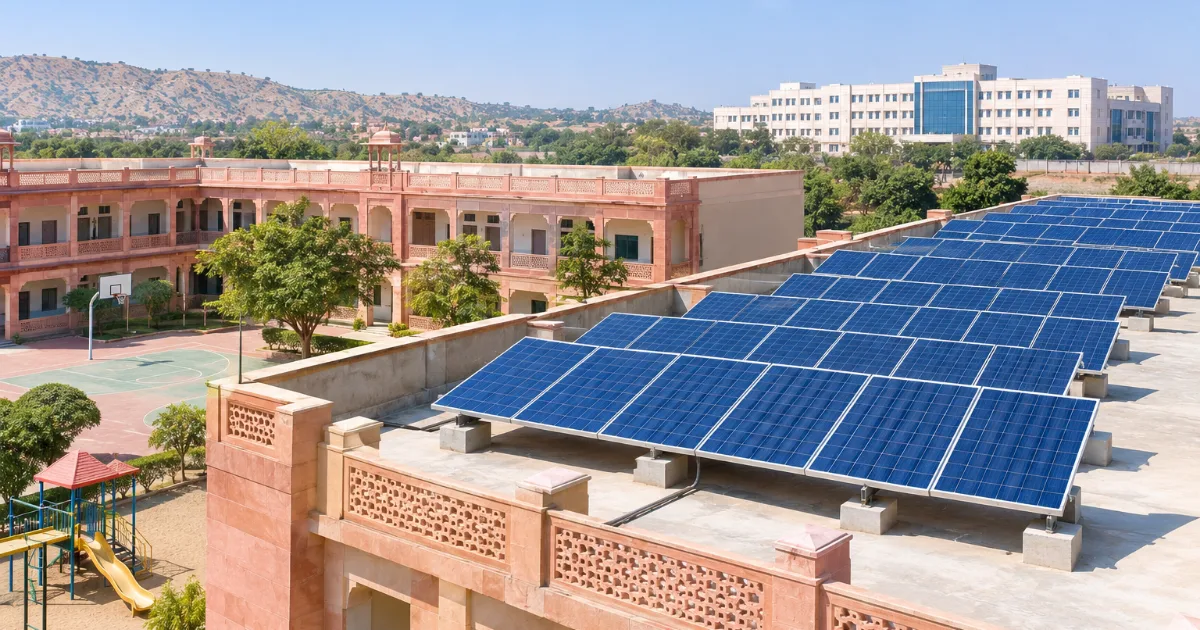
Schools, colleges, hospitals, hostels and other institutions often have large roofs, steady daytime electricity use and long-term budgets. That makes them well suited to rooftop solar. Rajasthan’s strong sunshine adds to the case. But institutions also have special needs: student safety, critical medical equipment, limited maintenance staff and strict procurement processes. This guide walks through how institutions can plan solar step by step, from load study and roof assessment to backup, approvals, funding and maintenance. Policies and incentives change, so always check the current rules on official portals before deciding.
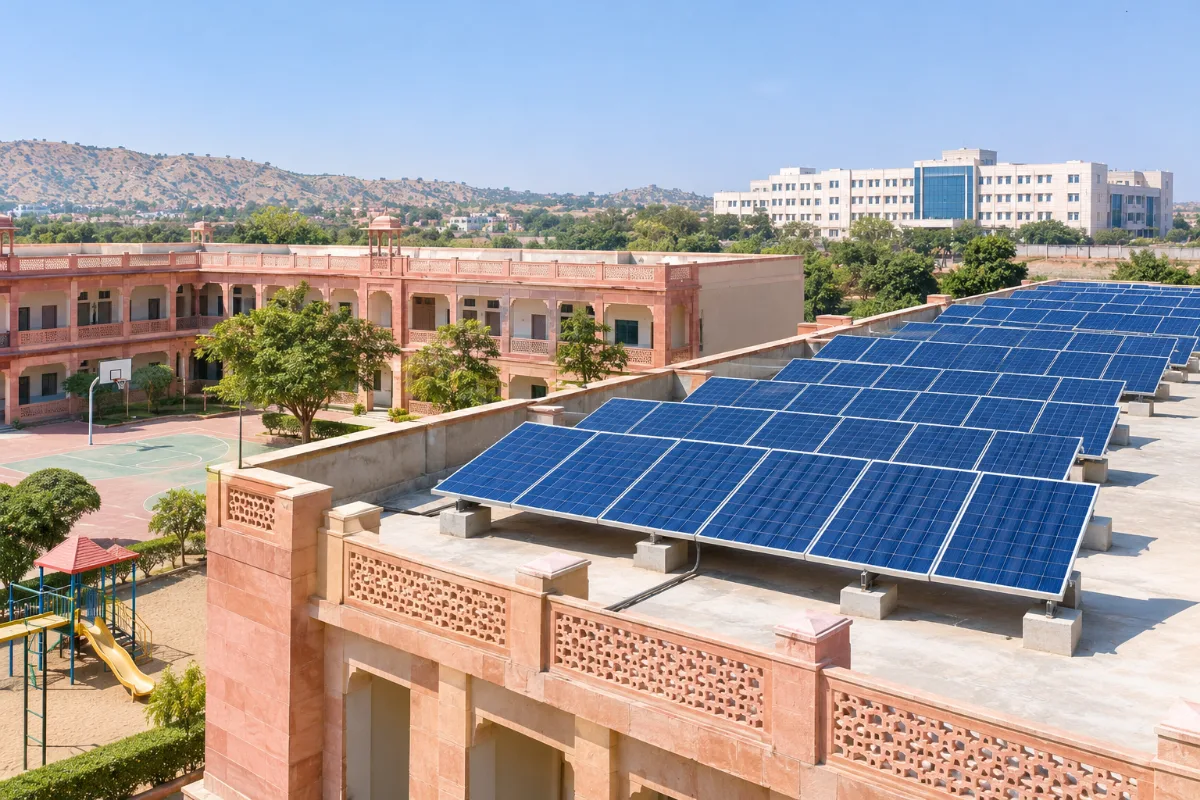
Why Solar Suits Schools, Hospitals and Institutions
Most schools and colleges use the bulk of their power during daylight hours for lighting, fans, computer labs and water pumping. Hospitals run around the clock, with heavy daytime loads from air conditioning, laundry, kitchens and equipment. Solar generation peaks in the same daytime window, so a large share of output can be used directly on site.
- Lower daytime grid consumption and more predictable energy costs
- Use of otherwise idle roof space on classrooms, wards and hostels
- A practical teaching tool for students on clean energy
- Support for sustainability goals of the institution
Load Study and Roof Assessment
Start with twelve months of electricity bills to understand consumption and seasonal patterns, such as vacations in schools or summer peaks in hospitals. A site survey then checks roof area, orientation, shading from water tanks and trees, and structural condition.
Older buildings may need a structural check before modules and mounting are added. Safe access for maintenance and fencing to keep students away from equipment should be part of the design.
A campus often has several buildings with separate meters. Mapping which roofs connect to which meter helps decide whether to install one larger system or several smaller ones, and avoids generating power on a roof whose meter has little daytime use.
- Collect bills for every connection on campus
- Note planned buildings or extensions that may shade roofs later
- Identify roofs that are due for waterproofing so that work is done before modules go up
- Locate safe routes for cables, inverters and the main distribution panel
Special Considerations for Hospitals and Labs
Hospitals, clinics and diagnostic labs depend on uninterrupted power for equipment, cold storage and critical care. Standard grid-tied solar switches off during grid outages for safety, so it does not replace backup generators or UPS systems.
Hybrid systems with battery storage can support selected critical loads, but they need careful design. Medical equipment power quality, earthing and integration with existing backup should be reviewed by qualified engineers.
Approvals, Net Metering and Incentives for Institutions
Grid-connected solar needs DISCOM approval and suitable metering. The general steps are covered in our guide to the rooftop solar net metering process in Rajasthan.
Government and private institutions may be eligible for different schemes, and eligibility rules change. Check the current rule on the MNRE and DISCOM portals. Institutions that want help understanding available schemes can explore subsidy consulting services.
Funding Models and Procurement
Institutions generally choose between buying the system outright (capital expenditure) and agreements where a developer owns the plant and the institution pays for power generated. Each model affects ownership, maintenance responsibility and long-term savings differently.
Whichever model is chosen, the board, trustees or management committee should understand the contract term, what happens if the building is renovated, and how the system will be handed over at the end of any agreement. A clear scope makes vendor comparison fair and transparent.
- Define capacity, roof areas and performance expectations clearly in tenders
- Ask for module, inverter and structure specifications and warranties
- Include monitoring, cleaning and maintenance in the scope
- Clarify who handles DISCOM approvals and documentation
Monitoring, Maintenance and Next Steps
Dust is the main enemy of output in Rajasthan, so regular module cleaning is essential. Remote monitoring dashboards help facility teams spot drops in generation early. Monitoring data can be held on cloud applications that let administrators view several campuses in one place.
ATTPL Solar can help institutions with feasibility, design and installation through our solar EPC services, and with larger campus systems under our commercial solar solutions.
Planning solar for a school, college, hospital or other institution? Contact ATTPL Solar to discuss your campus and energy needs.
Key takeaway: Institutions with daytime loads and large roofs can benefit from rooftop solar, but planning should cover safety, backup needs, procurement and maintenance, with current scheme rules checked on official portals.
Frequently Asked Questions
Will solar keep a hospital running during a power cut?
Standard grid-tied solar shuts down during outages. Backup needs generators, UPS or a carefully designed hybrid battery system.
Are there subsidies for school solar?
Schemes and eligibility change over time. Check the current rules on the MNRE portal and your DISCOM’s website.
How often should panels on a school roof be cleaned?
In dusty Rajasthan conditions, regular cleaning is needed. Your installer can suggest a schedule based on site dust levels.