Rajasthan has some of the best solar resources in India and large areas of farmland. Agrivoltaics — using the same land for both solar power and agriculture — aims to get the benefits of both instead of choosing one. It is still an emerging practice in India, but research and pilot projects are showing interesting results.
1. How agrivoltaics works
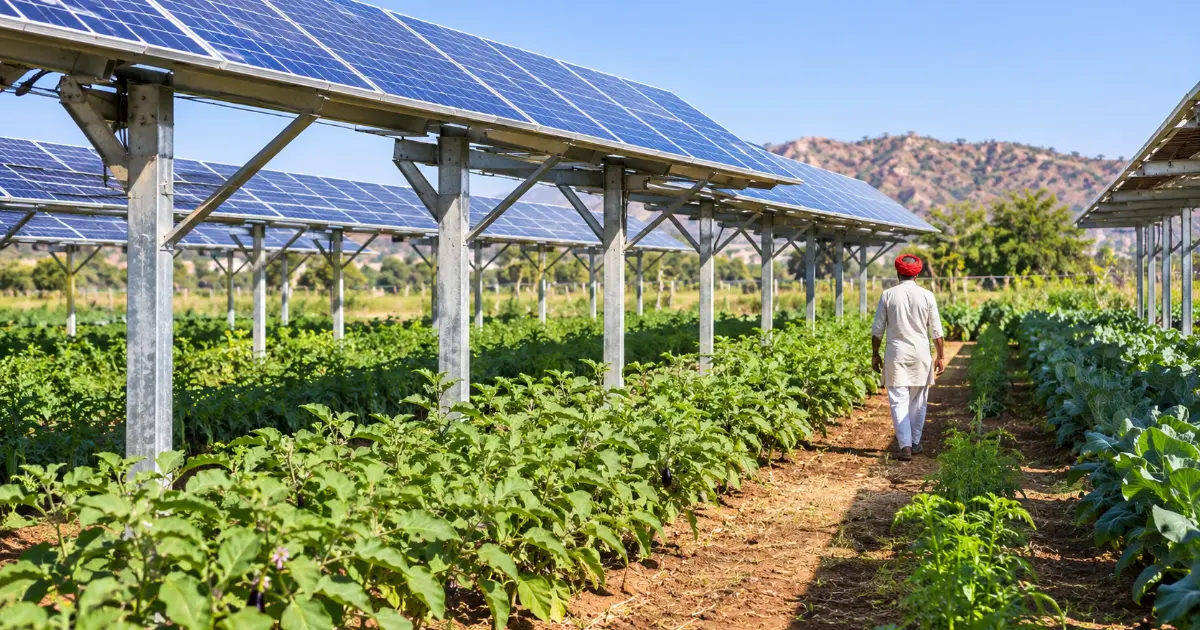
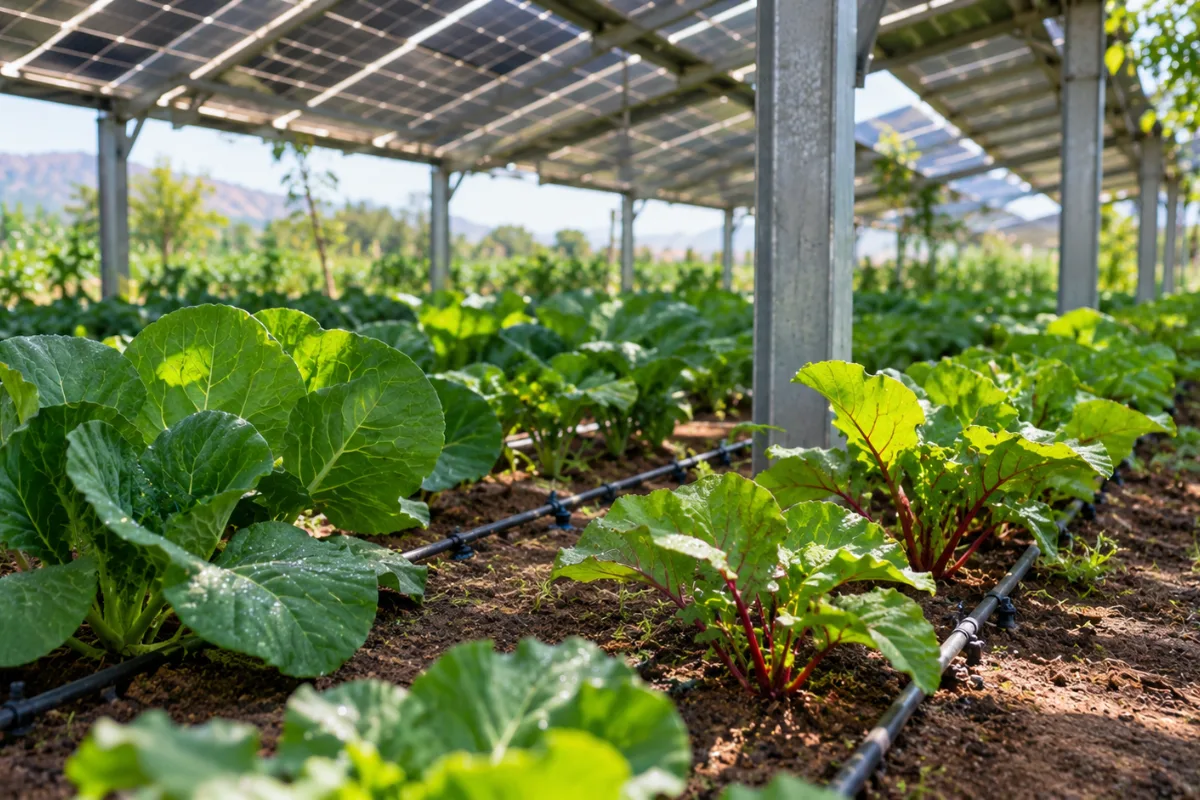
Solar panels are mounted higher than usual and spaced wider, so farm work and crop growth can continue underneath and between rows. The panels produce electricity while the partial shade reduces heat stress and water loss for some crops.
2. Potential benefits
- Two income streams from the same land: crops and electricity.
- Lower evaporation and soil temperature under panels, which can save irrigation water.
- Rainwater from panel surfaces can be harvested for irrigation.
- Shade can protect some crops during peak summer heat.
3. Which crops can suit
Shade-tolerant crops such as leafy vegetables, some pulses, herbs and certain medicinal plants have been tried under agrivoltaic structures. Research institutions in Rajasthan, including ICAR-CAZRI in Jodhpur, have studied such systems for arid conditions. Crop choice should be based on local trials and expert advice.
4. Design and cost considerations
- Higher, stronger structures cost more than ground-mounted plants.
- Row spacing and panel height must allow tractors and labour.
- Cleaning water and dust management must be planned.
- Land, grid connection and power purchase arrangements decide the economics.
5. Getting started
Farmers can also explore solar pumps and decentralised plants under the PM-KUSUM scheme — see our solar pump and PM-KUSUM guide. For crop advice, visit ATTPL Agri, read the solar vs diesel pump guide, and contact ATTPL to discuss a project.
Frequently asked questions
What is agrivoltaics?
Using the same land for both solar power generation and agriculture by mounting panels high enough for crops to grow underneath.
Does shade from panels reduce crop yields?
It depends on the crop. Some shade-tolerant crops do well, while sun-loving crops may yield less. Local trials guide the choice.
Is agrivoltaics more expensive than normal solar plants?
Usually yes, because structures are taller and stronger, but the land also produces crop income.
This article is general information. Actual generation, savings and approvals depend on site conditions and current DISCOM and government rules.