Fruits, vegetables and flowers lose value quickly in the heat. Without cold storage near the farm, growers often sell at low prices on harvest day. Solar-powered cold rooms bring cooling to villages and markets where grid power is unreliable or expensive.
1. How solar cold rooms work
A solar array powers the refrigeration system during the day. Many designs use thermal storage, such as phase change material or ice banks, to keep the room cool at night, with or without batteries. Some systems also connect to the grid or a backup generator.
2. Sizing the system
- Daily quantity and type of produce, and required storage temperature
- Room capacity and how long produce stays
- Insulation quality of the cold room panels and door
- Local solar resource and space for panels
- Backup needs during cloudy days
3. Who benefits most
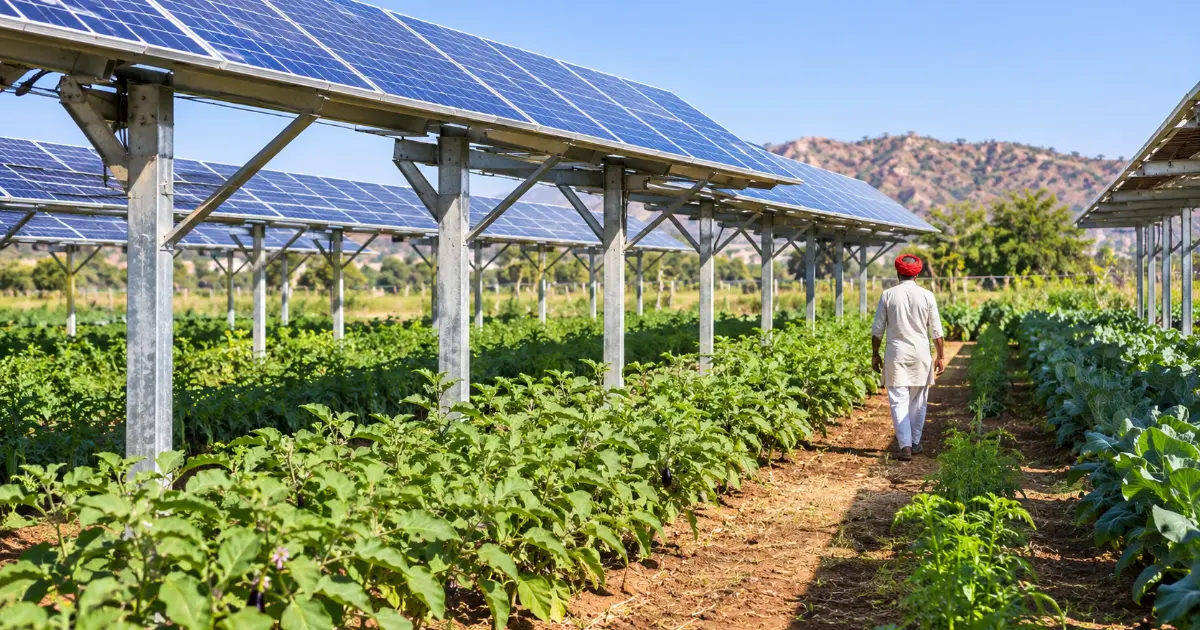
Farmer producer organisations (FPOs), vegetable growers near markets, flower growers and small traders gain most when a cold room lets them sell over several days instead of distress-selling. Solar irrigation is covered in our PM-KUSUM solar pump guide and dual land use in our agrivoltaics guide.
4. Costs, schemes and finance
Capital cost depends on capacity and design. Central and state horticulture and agriculture schemes have at times supported cold storage infrastructure; check the current guidelines of the National Horticulture Board and the state horticulture department. Finance options are discussed by ATTPL Finance.
5. Operation tips
- Pre-cool produce and avoid overloading
- Keep doors closed and use strip curtains
- Monitor temperature and humidity remotely
- Train an operator and keep a simple stock register
ATTPL Solar designs solar systems for agricultural uses, and farm advisory is available from ATTPL Agritech. For a discussion about your requirement, contact ATTPL HOLDCO or call toll-free 1800-890-0815.
Frequently asked questions
Can a solar cold room run at night?
Yes, using thermal storage, batteries or a grid backup, depending on the design.
Is there a subsidy for solar cold storage?
Schemes change; check the current National Horticulture Board and state horticulture department guidelines.
What capacity does a small FPO need?
It depends on daily harvest and storage duration; a site assessment is the best way to size the room.
Sources
This article is general information, not professional advice. Rules, rates and schemes change; please check the official sources and consult a qualified professional.
Related reading: Running a large shed or godown? Read the solar guide for warehouses and logistics parks.