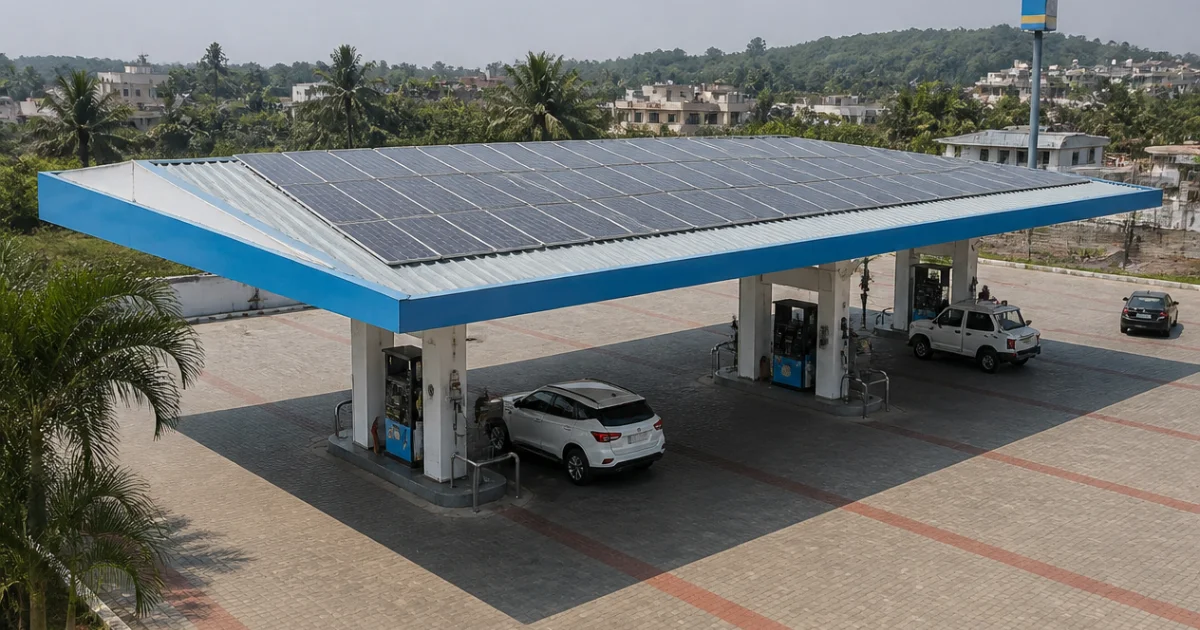
Fuel stations run lights, dispensers, compressors, air conditioners and billing systems for long hours, often with diesel backup. Solar on the forecourt canopy and building roof can cut electricity bills, but fuel stations have special safety rules that every design must follow.
1. Safety comes first
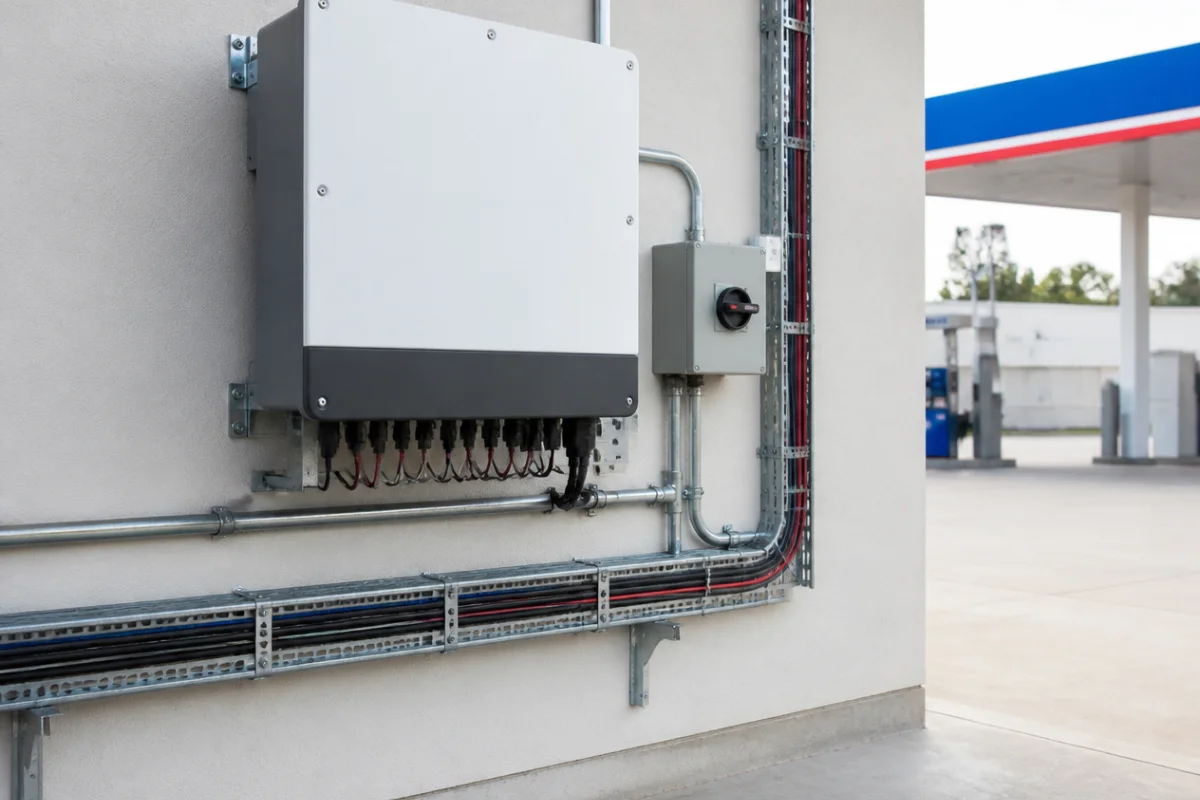
Areas around dispensers, tank vents and fill points are classified as hazardous because fuel vapour may be present. Electrical equipment there must meet strict standards. Solar inverters, junction boxes and cable joints should be placed outside hazardous zones, and the design must follow the oil marketing company’s and PESO’s requirements.
2. Where to put panels
- Forecourt canopy roof, after a structural check
- Sales building and service bay roofs
- Shade structures over parking or air-filling areas
3. Approvals
Dealers usually need permission from the oil marketing company before installation, plus the electricity distribution company’s approval for grid connection or net metering. Keep design drawings and test reports for inspections.
4. Loads and sizing
Daytime loads such as lighting, dispensers and air conditioning match solar generation well. Battery storage can support critical loads during outages; options are compared in our battery storage guide. EV charging points, increasingly common at fuel stations, are discussed in the solar carport and EV charging guide.
5. Planning checklist for dealers
- Collect twelve months of electricity bills and diesel generator running hours
- Get canopy and building drawings, or arrange a structural survey
- Mark hazardous zones on the site plan before choosing equipment locations
- Discuss the proposal with the oil marketing company early
- Check net metering or other options with the electricity distribution company
- Plan cable routes that avoid tank areas and vehicle paths
- Choose equipment with suitable protection ratings for outdoor and dusty conditions
- Agree on cleaning access that does not disturb fuelling operations
- Keep all drawings, certificates and test reports on file for inspections
Since fuel stations operate in public view, a neat, well-labelled solar installation also shows customers that the station is modern and safety-focused.
6. Protection and maintenance
Good earthing and lightning protection is essential at fuel stations. Schedule regular cleaning, thermal inspection and cable checks. ATTPL Solar can assess feasibility and installation. For a discussion about your requirement, contact ATTPL HOLDCO or call toll-free 1800-890-0815.
Frequently asked questions
Is solar allowed at petrol pumps?
Many fuel stations use solar, subject to oil company approval and safety rules for hazardous areas.
Can panels go on the canopy?
Often yes, after checking the canopy structure and keeping electrical equipment out of hazardous zones.
Who approves the installation?
Typically the oil marketing company and the electricity distribution company; check current requirements with both.
Sources
This article is general information, not professional advice. Rules, rates and schemes change; please check the official sources and consult a qualified professional.