A rooftop solar system adds metal structures, long cable runs and electronic equipment to the highest point of a building. Without proper earthing and surge protection, a lightning strike or a fault can damage panels and inverters, cause fires or create shock hazards. In Rajasthan’s pre-monsoon and monsoon storms, this protection is not optional. Here is what a safe installation should include.
1. Why earthing matters
Earthing provides a low-resistance path for fault currents and surges to flow safely into the ground. It protects people from touching live metal parts, helps protective devices trip quickly and limits damage to equipment.
2. What should be earthed
- Module frames and mounting structures: bonded together and connected to earth with suitable conductors and clamps.
- DC side: as required by the system design and inverter type.
- AC side: inverter body, AC distribution box and connection to the building’s earthing system.
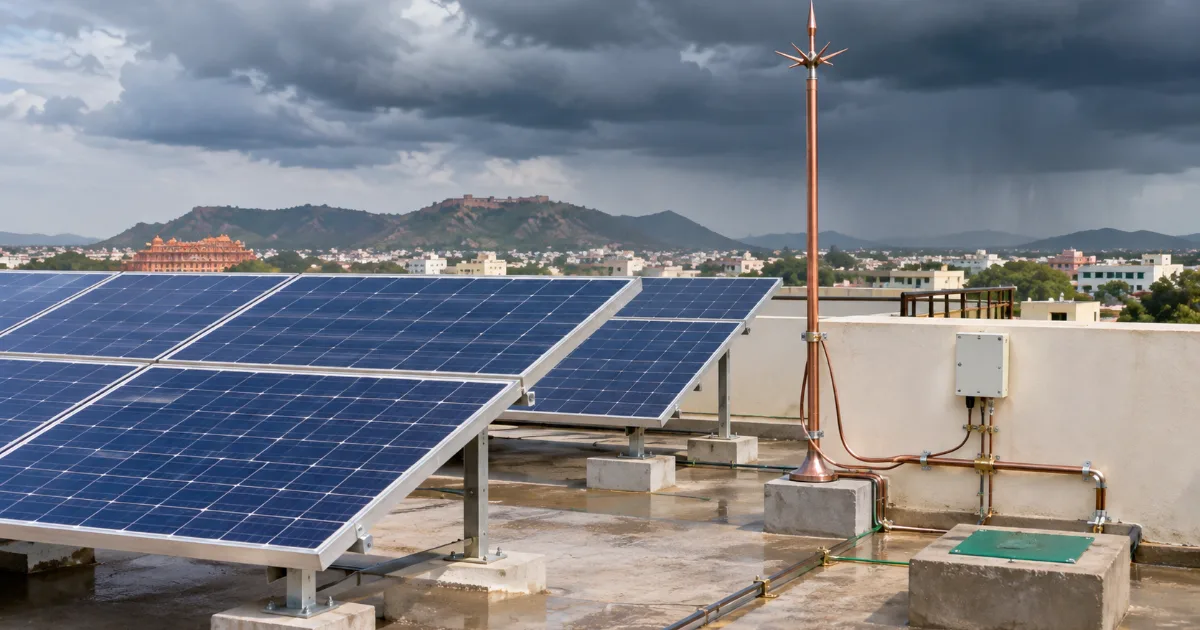
- Lightning protection system: its own down conductor and earth electrode.
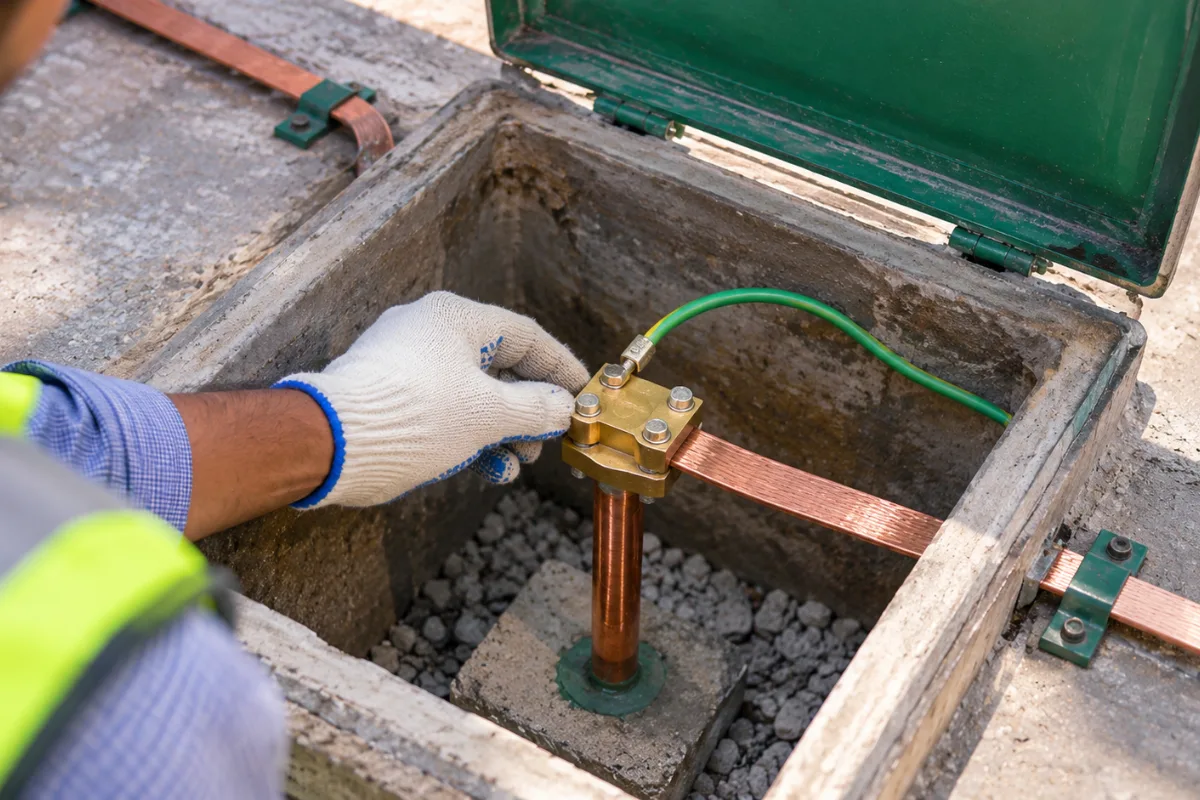
Rooftop solar specifications commonly call for separate earth pits for the DC side, the AC side and the lightning arrester, interconnected as per the design. Follow your DISCOM’s and the scheme’s technical requirements, along with Indian Standards on earthing.
3. Lightning protection
- A lightning arrester or air terminal positioned so that the whole array falls within its zone of protection, designed according to the relevant lightning protection standards.
- A dedicated down conductor routed by the shortest path, kept away from DC cables where possible.
- Its own earth electrode with low resistance.
4. Surge protection devices (SPDs)
Even when lightning strikes nearby rather than directly, surges travel through cables. SPDs on the DC side (in the array junction box or inverter) and on the AC side (in the AC distribution box) divert these surges to earth and protect the inverter. Check that SPDs are rated for the system voltage and replaced when their indicators show they have operated. Inverter choices are covered in our solar inverter types guide.
5. Installation good practice
- Use corrosion-resistant earthing conductors and electrodes and proper lugs; avoid loose or painted joints.
- Keep earth pits accessible with covers for inspection.
- Measure earth resistance after installation and record the values.
- Bond the mounting structure properly; see our mounting structures guide.
6. Maintenance
- Test earth resistance periodically, especially before the monsoon.
- Check SPD status indicators and tighten earthing connections.
- Inspect the lightning arrester and down conductor for corrosion or damage.
- Include these checks in your AMC; see the solar warranty and AMC guide.
Frequently asked questions
Does every rooftop solar system need a lightning arrester?
Most rooftop specifications require one, and it is strongly recommended in areas with frequent storms. The designer should confirm the protection zone covers the array.
How many earth pits does a rooftop system need?
Specifications commonly require separate earth pits for DC, AC and lightning protection; follow the scheme, DISCOM and designer’s requirements.
Can I connect solar earthing to my existing house earth?
Connections must follow the design; the solar system’s earthing and the building earthing are usually bonded, but lightning protection needs its own dedicated electrode.
Sources
Planning a safe rooftop solar installation? Contact ATTPL Solar.