In many Indian cities, pigeons nest under rooftop solar panels and monkeys jump across arrays. The result is droppings that block sunlight, chewed cables, displaced panels and, sometimes, cracked glass. A few simple, humane measures protect your investment without harming the animals.
1. What damage looks like
- Droppings and nesting material on the glass, which cause shading and hot spots and lower output.
- Nests under panels that trap debris, block airflow and can become a fire risk near cables.
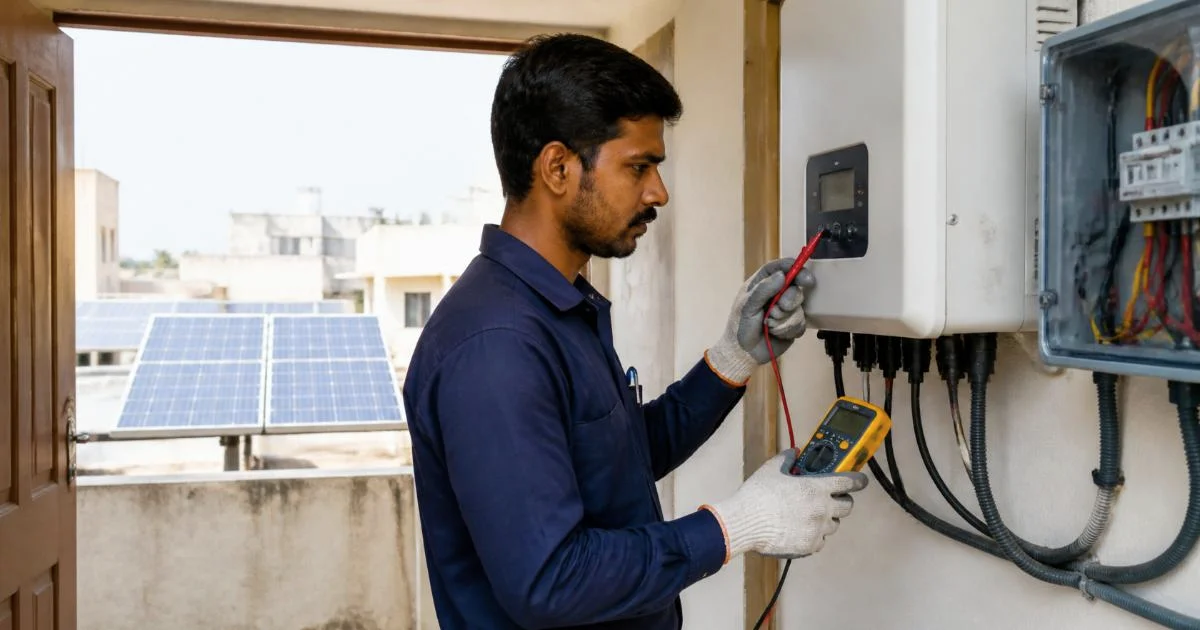
- Chewed or pulled DC cables and connectors, leading to faults or earth leakage.
- Loose or cracked panels where monkeys jump or sit on the array.
2. Bird proofing for panels
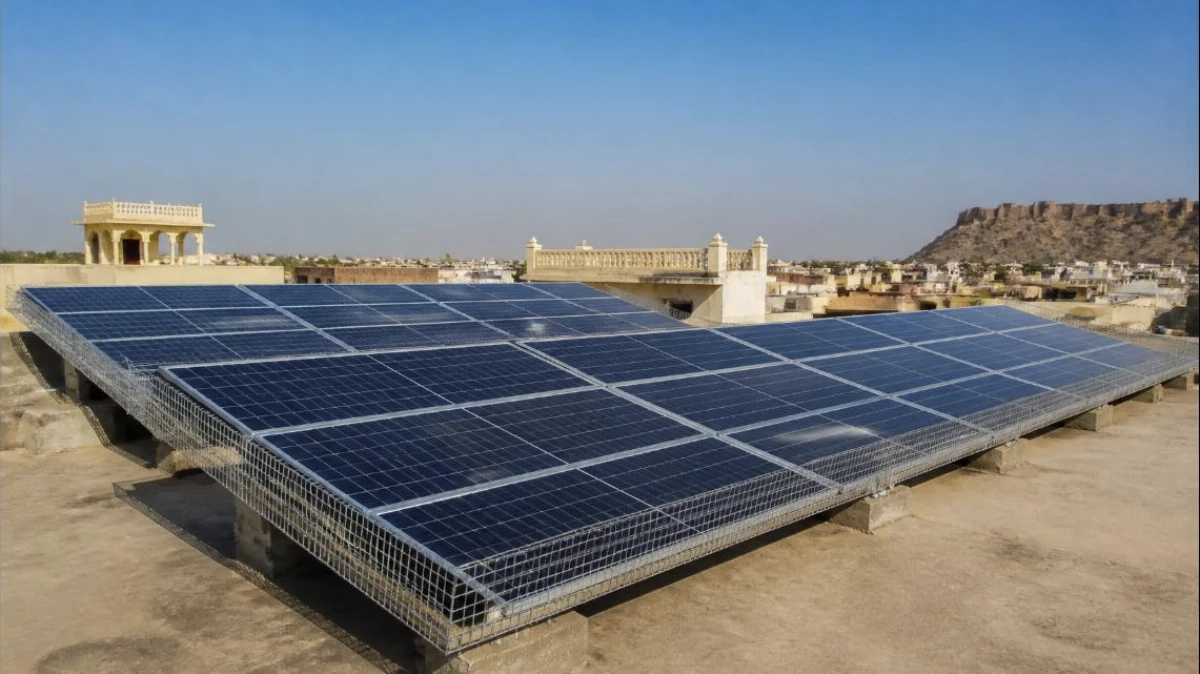
The most common solution is a galvanised or PVC-coated mesh guard clipped around the gap between the panel edge and the roof. It stops birds getting under the array while leaving airflow and drainage open. Clips should attach to the panel frame without drilling, so the panel warranty is not affected; check this with your installer.
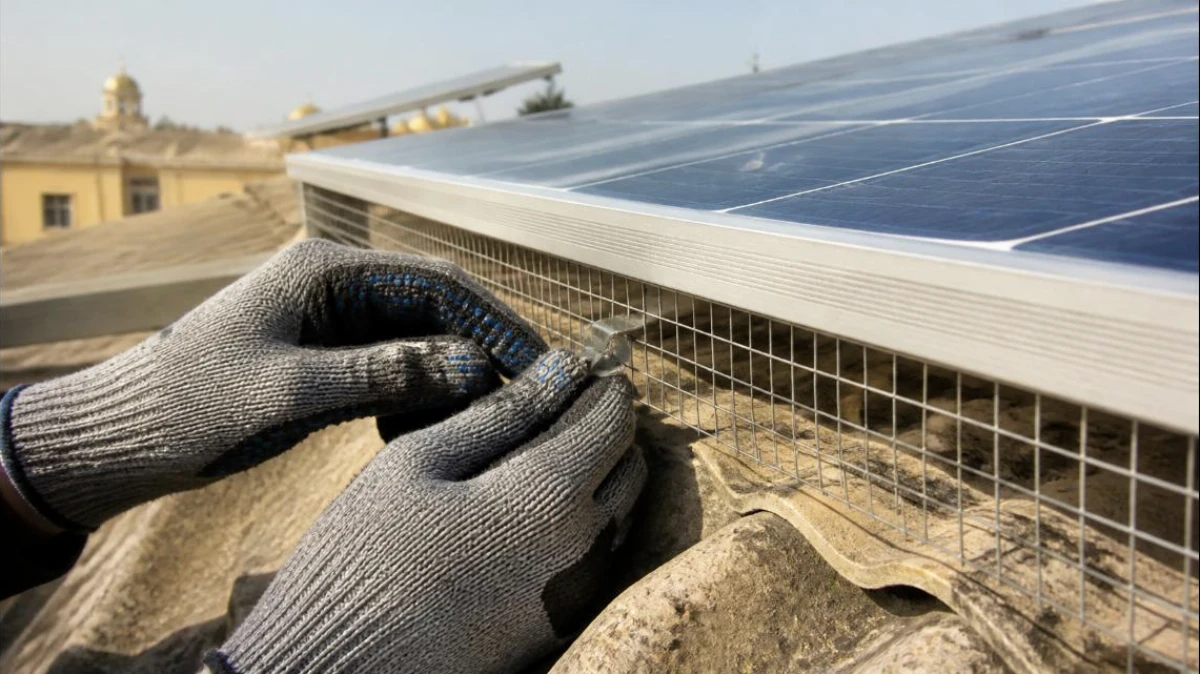
3. Managing monkey activity
- Use sturdy mounting structures with proper clamps and enough height clearance, as covered in our solar mounting structures guide.
- Route DC cables in conduits or cable trays rather than loose runs.
- Keep food, water and waste off the roof so the roof is less attractive.
- Where local rules allow, use physical deterrents such as roof-edge fencing. Never use methods that injure animals; protected species and local wildlife rules apply.
4. Inspection and cleaning
Inspect the array at least monthly in seasons of heavy bird activity: look for droppings, nests, loose mesh and damaged cables. Clean panels with soft water and a non-abrasive brush, as explained in our panel cleaning and maintenance guide. A sudden fall in generation on your monitoring app is often the first sign of a problem; see performance monitoring.
5. Plan protection at installation
It costs less to include mesh, cable trays and robust clamps in the original design than to retrofit later. Ask your installer to include them in the quotation and the AMC scope.
Frequently asked questions
Does bird mesh reduce solar output? No. It sits below and around the panel edges, not over the glass, so it does not shade the cells.
Will mesh void my panel warranty? Clip-on systems that do not drill the frame are usually acceptable, but confirm with the panel maker or installer.
How often should I check for nests? Monthly during nesting seasons, and after any drop in generation.
Talk to ATTPL Solar
ATTPL Solar designs and installs rooftop and ground-mounted solar for homes, businesses and institutions in Rajasthan. Call toll-free 1800 890 0815 or visit solar.attplai.com for a site survey.