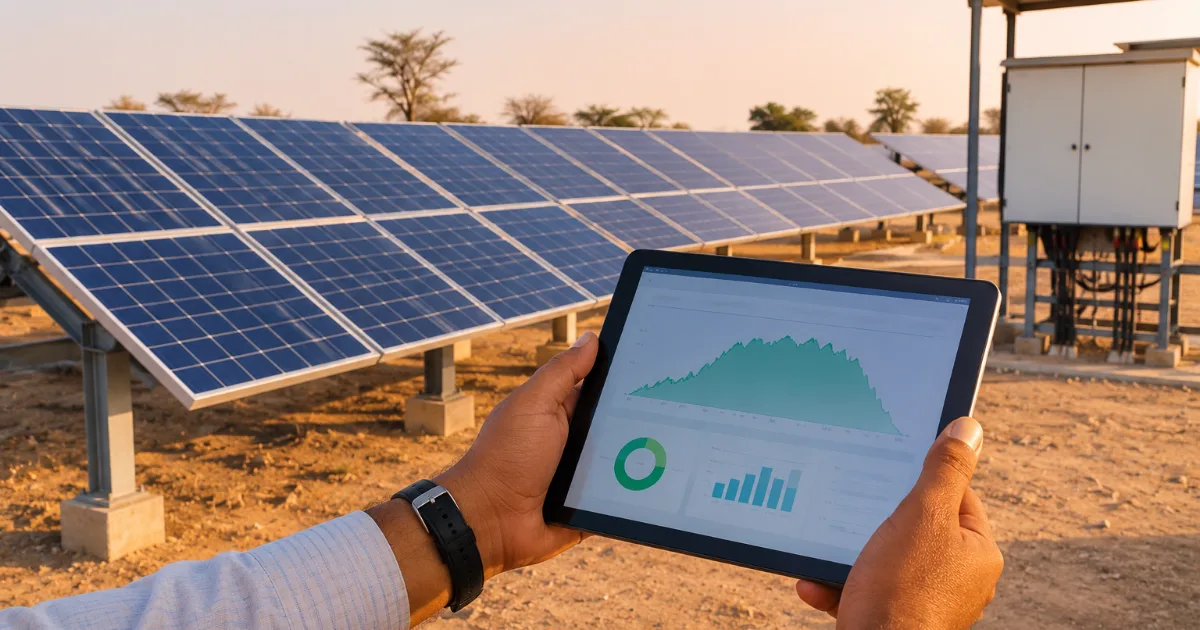
A solar plant is a long-term asset, and like any asset its value depends on how well it performs year after year. Many owners install a system and only look at it when the electricity bill seems high. Performance monitoring changes that by showing daily generation, flagging faults and tracking long-term degradation. This guide explains which metrics matter, how to read them, what causes generation to drop and what degradation is considered normal, so homeowners, businesses and farmers in Rajasthan can protect their solar investment.
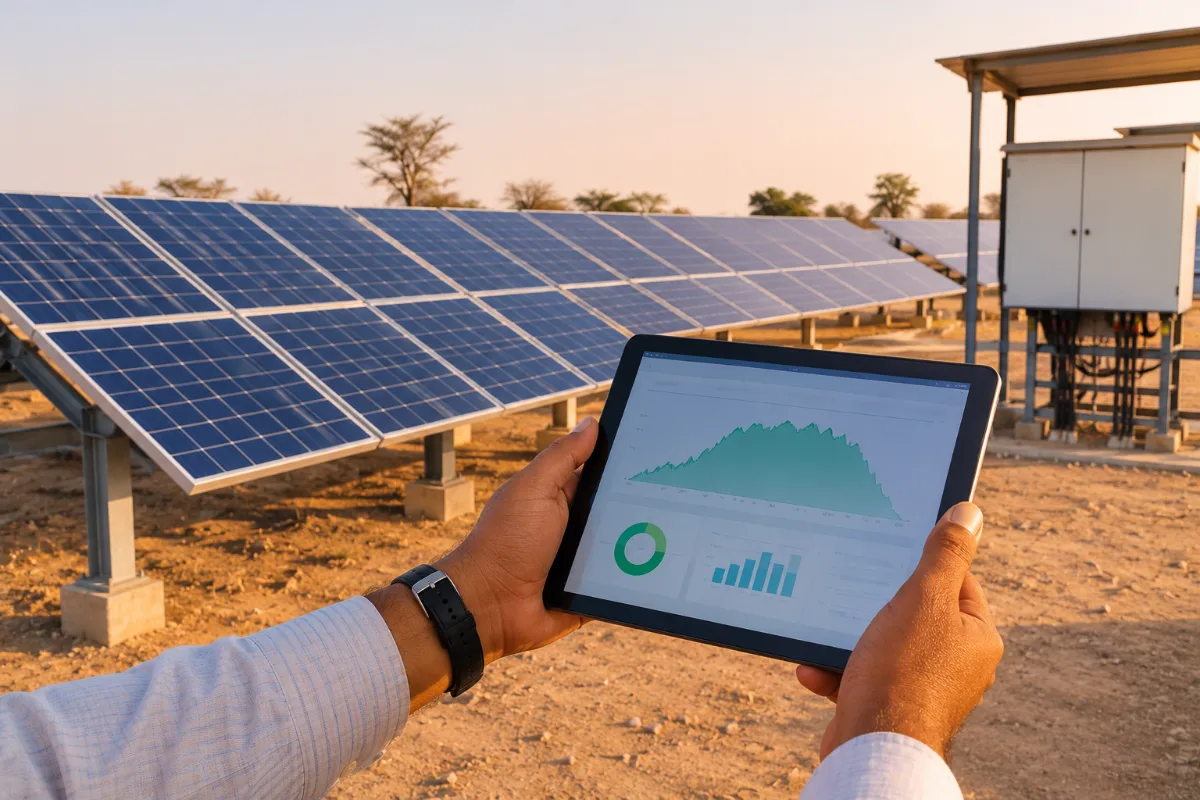
Why Solar Plant Performance Monitoring Matters
Small problems in a solar plant can quietly reduce output for months: a tripped string, a failed inverter, heavy dust or new shading from a neighbouring building. Without monitoring, these losses go unnoticed. Regular monitoring helps you confirm the plant is delivering what it was designed for, plan cleaning and maintenance, and support warranty claims with data.
Treating the plant as an asset with measurable risks fits a broader group risk management framework for businesses that operate several sites.
Key Metrics in Solar Performance Monitoring
- Daily and monthly generation (kWh): the basic output figure, compared with expected values for the season
- Specific yield (kWh per kWp): generation divided by installed capacity, useful for comparing plants of different sizes
- Performance ratio (PR): actual output compared with the theoretical output for the sunlight received, which separates plant health from weather
- Inverter availability: how much of the time inverters were operating when sunlight was available
- String or MPPT level data: shows whether one part of the array is underperforming
Performance ratio is especially useful because it adjusts for cloudy or hazy days. A falling PR on clear days usually points to a plant issue rather than weather.
Common Causes of Generation Drop
Dust and soiling are the most common cause in Rajasthan, particularly after dust storms. Other causes include inverter faults, blown fuses, loose connectors, grid outages or voltage issues that trip inverters, shading from new structures or trees, and damaged modules or hot spots.
For solar pumps on farms, output also depends on water levels and pump health. Pairing pump data with smart irrigation planning helps farmers use daytime solar power more effectively.
Understanding Solar Panel Degradation
All solar modules slowly lose output over time due to exposure to sunlight, heat and weather. Manufacturers state the expected rate in their performance warranty, which usually guarantees a minimum percentage of rated output after a set number of years. Read your module datasheet and warranty to know what to expect for your specific modules.
Degradation is gradual. A sudden or large drop is not normal ageing and should be investigated. Faster degradation can be linked to manufacturing defects, hot spots, cracked cells, moisture ingress or potential induced degradation. Thermal imaging and IV curve testing can help identify such faults.
Keep the original commissioning report, module datasheets, serial numbers and early generation records safely. These form the baseline against which future performance is judged, and manufacturers usually ask for this kind of evidence when a warranty claim is raised. Without a baseline, it becomes very hard to prove that a module has degraded faster than promised.
Setting Up a Practical Monitoring Routine
- Check generation on the monitoring app daily or weekly
- Compare monthly generation with the same month of the previous year
- Track performance ratio and investigate sustained drops
- Log cleaning dates and observe their effect on output
- Schedule periodic inspection of inverters, cables, earthing and structure
Businesses with several plants can bring monitoring exports into one dashboard using data analytics services, making it easier to compare sites and spot outliers.
Set simple alert thresholds, such as zero generation during daylight or an inverter offline for more than an hour, so that someone is notified and acts quickly instead of discovering the problem at month end.
How ATTPL Solar Can Help
ATTPL Solar can help with design, installation, monitoring setup and maintenance planning through our solar EPC services. For factories and large loads, our industrial solar solutions include planning for monitoring from the start, and homeowners can explore residential solar.
Concerned about your plant’s output or planning a new system with proper monitoring? Contact ATTPL Solar to discuss your requirements.
Key takeaway: Monitor generation and performance ratio regularly, investigate sudden drops quickly, keep modules clean and compare long-term output against the module warranty to understand degradation.
Frequently Asked Questions
What is a good performance ratio for a solar plant?
It depends on design, climate and equipment. Compare with your designer’s estimate and watch the trend; a steady decline needs investigation.
How do I know if my panels are degrading too fast?
Compare long-term, weather-adjusted output with the module warranty. A sudden or large fall is not normal ageing.
Does dust really affect output much?
Yes. In dusty conditions soiling can noticeably reduce generation, which is why regular cleaning matters in Rajasthan.