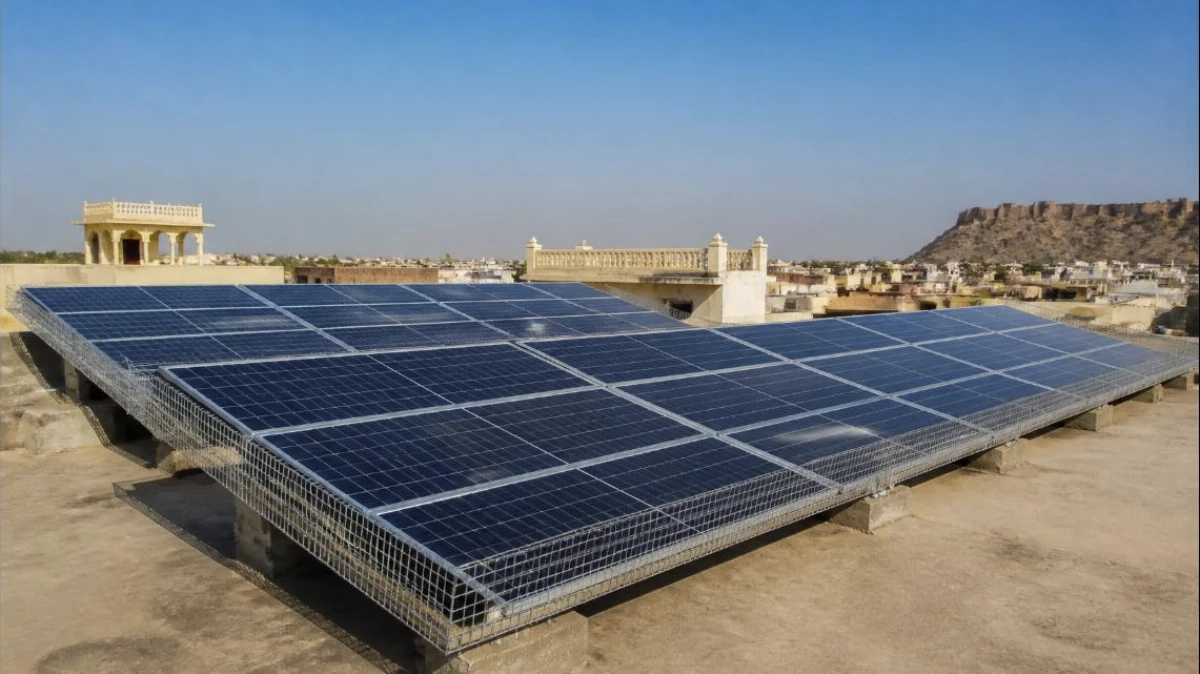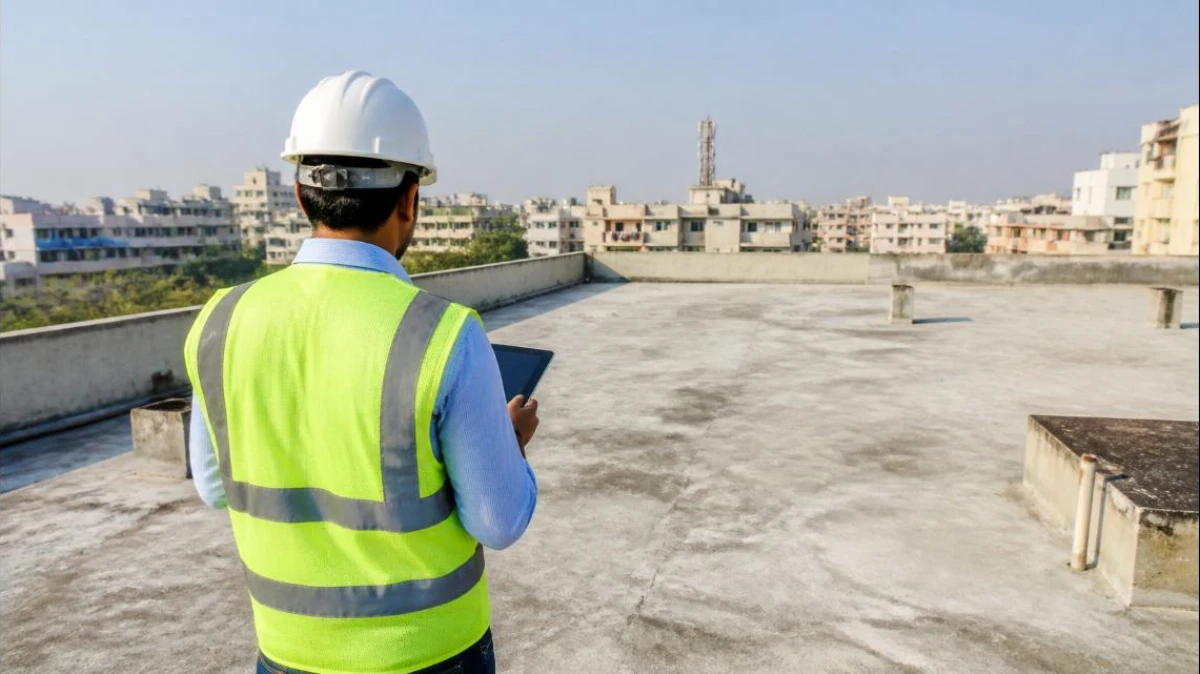
A rooftop solar plant is expected to run for 25 years or more. The roof under it must carry the extra weight and resist strong winds for that whole period. A structural check before installation avoids leaks, cracks and, in rare cases, dangerous failures.
1. What loads solar adds
- Dead load: panels, mounting structure, ballast (if used), cables and walkways.
- Wind load: uplift and pressure on the panels, which is higher on elevated structures and roof edges.
- Maintenance load: people walking for cleaning and repairs.
Elevated structures and ballasted systems add more load than low-tilt rails fixed directly to the roof. The design should follow the relevant wind load code and the structure maker’s guidance.
2. RCC roofs: what to inspect
- Visible cracks, sagging, dampness or seepage marks on the ceiling below.
- Exposed or rusted reinforcement, spalling concrete.
- Condition of waterproofing; repair it before installation, as covered in our roof waterproofing guide.
- Age of the building and any later additions on the roof.
3. Metal sheet roofs
- Purlin size, spacing and corrosion.
- Sheet thickness and condition; replace thin or rusted sheets.
- Fixing method that keeps the roof leak-proof.
4. Tests an engineer may use
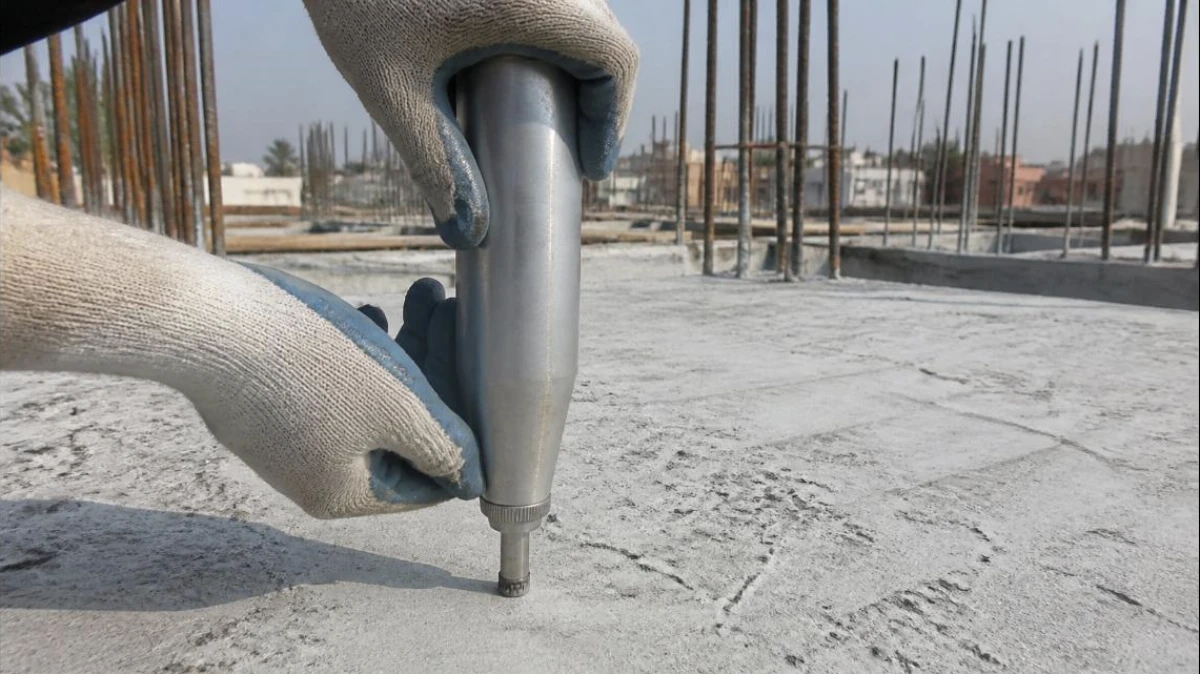
Depending on the building, an engineer may do a visual survey, use a rebound hammer or ultrasonic tests on concrete, check drawings, and calculate load capacity. Older or distressed buildings may need a full structural audit.
5. Warning signs: do not install until fixed
- Wide or growing cracks in slabs or beams.
- Heavy leakage or corroded steel.
- Roof already loaded with water tanks or extra floors not in the original design.
6. Good installation practice
Anchor structures without damaging waterproofing, seal every penetration, keep drainage paths open and leave walkways. Our step-by-step installation guide explains what happens on installation day.
Frequently asked questions
Is a structural check mandatory? Requirements vary by scheme and building type, but it is good practice for all rooftop systems and essential for older buildings.
Can I install solar on a newly built roof? Yes, once waterproofing is complete and the roof is cured.
Talk to ATTPL Solar
ATTPL Solar designs and installs rooftop and ground-mounted solar for homes, businesses and institutions in Rajasthan. Call toll-free 1800 890 0815 or visit solar.attplai.com for a site survey.