A rooftop solar system is expected to generate electricity for 25 years or more. Over that time, panels age, inverters work hard every day, and dust, heat and monsoon rain test every connection. Warranties and a good maintenance plan decide whether your investment keeps paying back or slowly loses value. Yet many homeowners sign up without understanding what is actually covered. This guide explains the different warranties on a solar system and what to look for in an annual maintenance contract (AMC).
1. Panel warranties: product and performance
Solar panels usually come with two separate warranties.
- Product warranty covers manufacturing defects such as faulty junction boxes, frame problems or delamination, typically for a period of years set by the manufacturer.
- Performance warranty promises that the panel will still produce a stated percentage of its rated power after a long period, often 25 years or more, with gradual degradation allowed each year.
Read the degradation terms carefully and keep the panel serial numbers and invoices. Our guide to solar panel types explains how technology affects degradation.
2. Inverter warranty
The inverter is the component most likely to need repair or replacement during the system’s life. Standard inverter warranties are shorter than panel warranties; some manufacturers offer extensions. Check whether the warranty includes replacement or only repair, who handles the claim and how long a replacement takes. See our inverter types guide for the differences between string, micro and hybrid inverters.
3. Workmanship and installation warranty
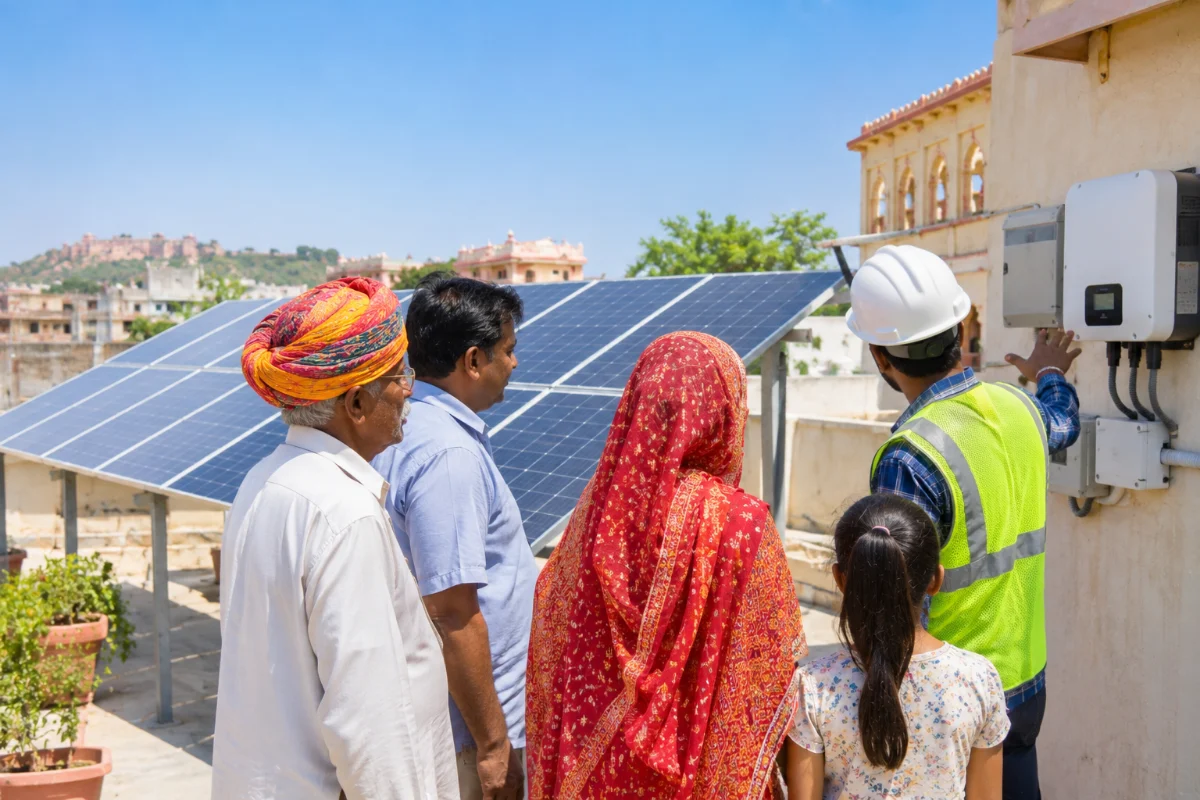
Many problems come not from equipment but from installation: loose connections, poor earthing, roof leaks around mounting points or undersized cables. A good installer gives a written workmanship warranty covering the mounting structure, wiring and roof penetrations for a defined period. Ask who will attend if there is a fault, and how quickly.
4. What warranties usually do not cover
- Damage from storms, lightning, fire or theft — this needs insurance.
- Damage caused by unauthorised repairs or modifications.
- Poor performance caused by shading, dirt or lack of cleaning.
- Labour and transport costs, in some product warranties.
Home insurance that covers rooftop solar is worth considering; ATTPL Finance can explain the options.
5. What a good AMC includes
An annual maintenance contract keeps the system healthy between warranty claims. A useful AMC typically includes:
- Scheduled panel cleaning at a frequency suited to local dust levels.
- Periodic inspection of mounting structures, bolts and roof penetrations.
- Checks of DC and AC connections, earthing and lightning protection.
- Inverter health checks and review of generation data.
- A defined response time for breakdowns.
Our guide to solar panel cleaning and maintenance in Rajasthan explains why cleaning matters so much in dusty regions.
6. Monitor your generation
Most inverters provide an app or display showing daily generation. Compare it month by month and with the same month last year. A sudden drop may indicate a fault, shading from a new structure or heavy soiling. Early detection keeps losses small and makes warranty claims easier.
7. Keep your documents together
Store invoices, warranty cards, serial numbers, the net-metering agreement and commissioning reports in one folder, with scanned copies. If you sell the house, transferable warranties add value. Details of the net-metering process are in our net-metering guide, and subsidy information is in our PM Surya Ghar guide.
8. Questions to ask before you sign
- Which brand and model of panels and inverter will be installed, and are the warranties registered in my name?
- Who handles warranty claims, and what is the response time?
- What exactly does the workmanship warranty cover, and for how long?
- How often will panels be cleaned under the AMC, and what does it cost after the free period?
- Will generation be monitored, and how will I be alerted to problems?
Written answers to these questions protect you if problems arise years later, even if the sales staff have changed.
Frequently asked questions
How long do solar panels last?
Good-quality panels typically keep producing for 25 years or more, with a small, gradual loss of output each year.
Is an AMC necessary for a home system?
It is not mandatory, but regular cleaning and inspection protect output and safety, and an AMC makes this routine.
Who do I contact for a warranty claim?
Usually your installer first, who coordinates with the manufacturer. Keep serial numbers and invoices ready.
Want a rooftop system with clear warranties and service? Contact ATTPL Solar.