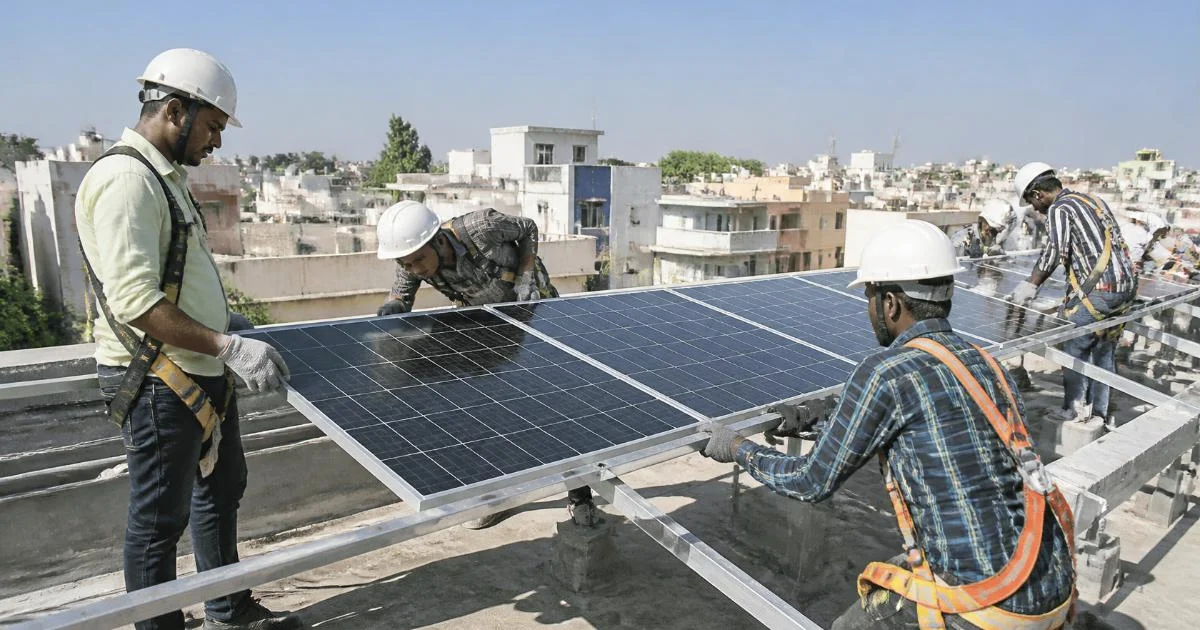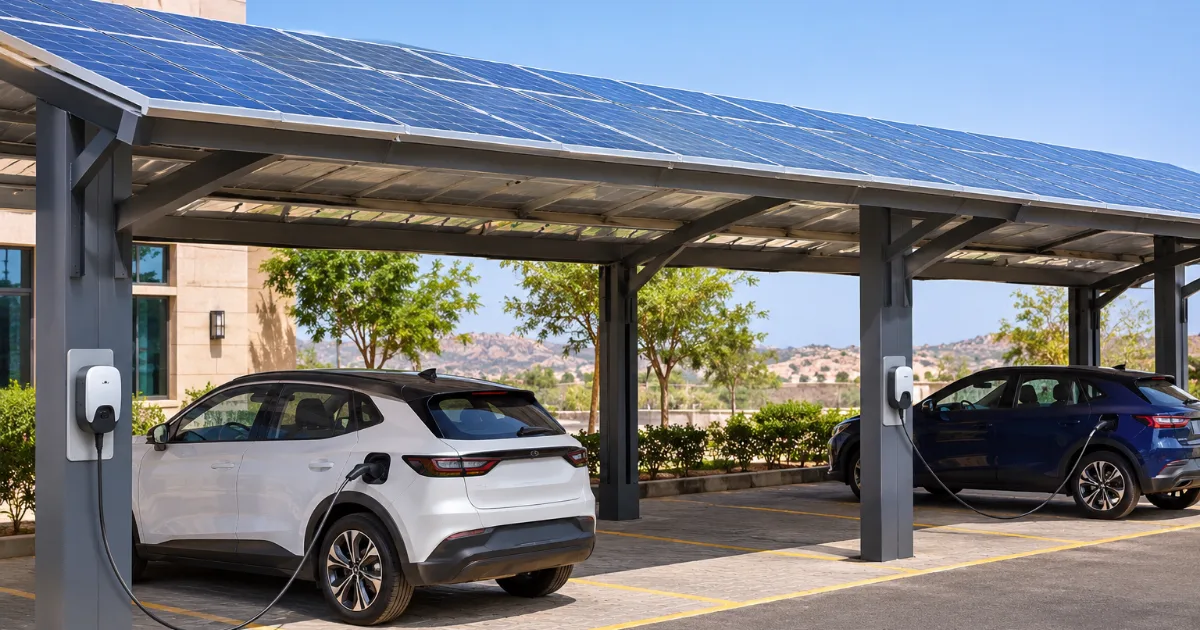
Parking areas take up a lot of open space at offices, factories, malls, hospitals and housing societies. A solar carport turns that space into a power plant while shading vehicles from the harsh Rajasthan sun. Add electric vehicle chargers underneath and the same structure can help power EVs for staff, visitors or company fleets. This guide explains how a solar carport with EV charging works, what to consider in design and sizing, how chargers are integrated and what approvals and maintenance to plan for. Rules for grid connection and EV charging can change, so check current guidelines with your DISCOM and official portals.
What Is a Solar Carport with EV Charging?
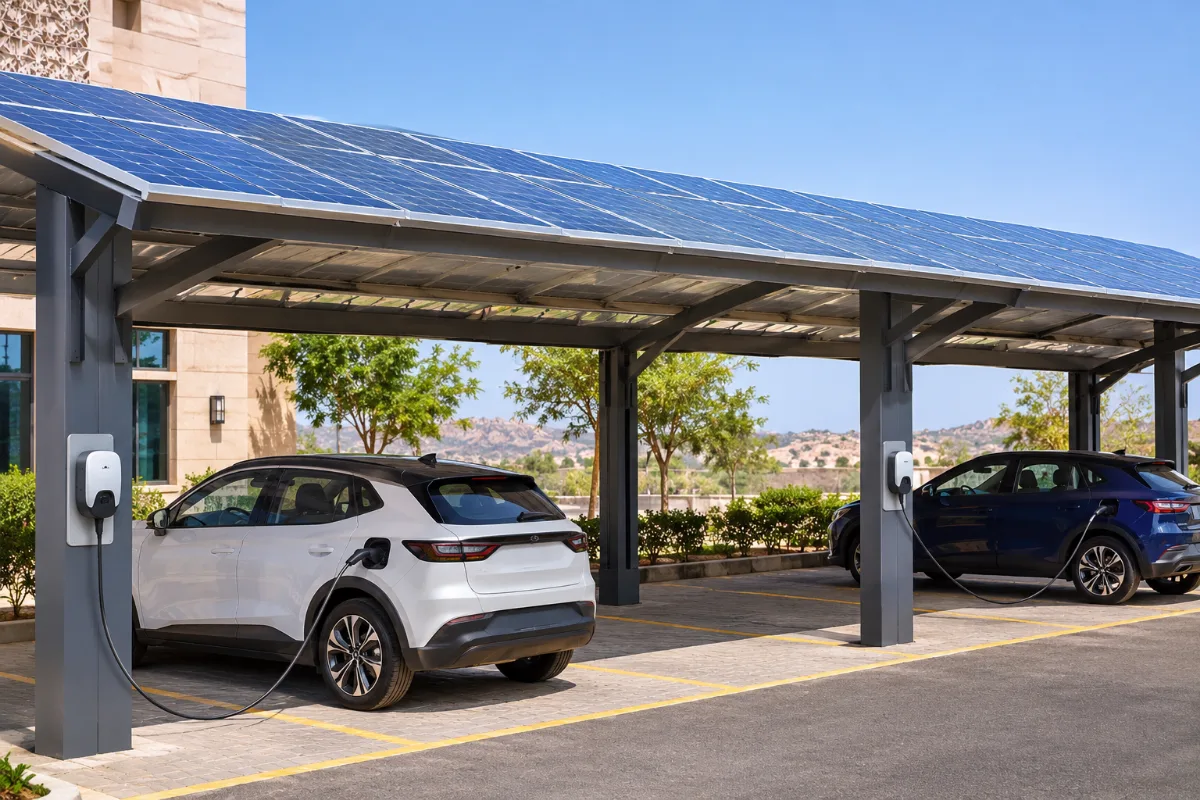
A solar carport is an elevated steel structure over parking bays, with solar modules forming the roof. The modules generate electricity during the day, which can feed the building, charge EVs parked below or export to the grid where net metering or other arrangements allow.
EV chargers are mounted on carport columns or on separate pedestals. Power for charging can come from solar generation, the grid or both, managed through the building’s electrical panel.
Benefits of a Solar Carport for Businesses and Societies
- Uses existing parking space without needing roof area
- Shades vehicles and reduces cabin heat in summer
- Generates power that can offset daytime electricity bills
- Supports EV adoption for employees, visitors and fleets
- Can be designed for future expansion as EV use grows
For organisations running electric delivery vehicles, a carport at the depot can support daily charging cycles. If you are planning electric vans for last-mile delivery services, match charger numbers and timings to your routes.
Solar Carport Design and Structural Considerations
Carports must withstand wind loads, dust and high temperatures. Key design points include column spacing that leaves room for parking and turning, clear height for SUVs or vans, module tilt for generation, and water drainage off the roof.
Foundations are typically RCC footings or piles designed for wind uplift. Concrete quality matters, and a concrete quality control checklist for construction sites is a useful reference when footings are cast.
Cable routing, earthing and lightning protection should be planned at the design stage, not added later.
Sizing Solar and Choosing EV Chargers
Start with demand. Estimate how many vehicles will charge, how many hours they stay parked and how much energy each needs. Office parking where cars stay all day suits slower AC chargers, while fleets with tight turnaround may need DC fast chargers.
- Count usable parking bays and the module area they provide
- Estimate daily EV charging energy and building daytime load
- Choose charger types and numbers for current and future demand
- Check the sanctioned load and whether an upgrade is required
- Plan load management so chargers do not exceed the connection limit
Solar output and EV demand rarely match hour by hour, so the grid connection, and sometimes battery storage, balances the two.
It also helps to decide early who will use the chargers and how access will work. Staff-only charging, visitor charging and fleet charging each need different metering, booking and billing arrangements, and some sites start with a few chargers and add more once usage is clear.
Approvals, Metering and Funding
Grid-connected systems need DISCOM approval, and EV charging connections may have their own tariff category and requirements. Our guide on the rooftop solar net metering process in Rajasthan explains the general grid connection steps. Check the current rules on the DISCOM and official portals, as policies and tariffs change.
Carports cost more per kilowatt than simple rooftop systems because of the taller steel structure. Businesses often compare self-funding with business loan options or other financing models before deciding.
Maintenance and How ATTPL Solar Can Help
Rajasthan dust means modules need regular cleaning. Plan safe access for cleaning at carport height, periodic checks of bolts and structure, inspection of chargers and cables, and monitoring of generation and charging data.
ATTPL Solar can help with site assessment, design, structure, electrical integration and installation through our solar EPC services. For buildings that also have roof space, our commercial solar solutions can work alongside a carport.
Thinking about a solar carport with EV charging? Contact ATTPL Solar to discuss your parking layout, energy needs and next steps.
Key takeaway: A solar carport with EV charging turns parking space into clean power and charging capacity; size it around real charging demand, design for wind and dust, and confirm grid rules with your DISCOM.
Frequently Asked Questions
Can a solar carport fully power EV chargers?
Not always. Generation varies through the day, so the grid or storage usually supports charging when solar output is low.
Do I need DISCOM approval for a solar carport?
Grid-connected systems generally need DISCOM approval. Check current requirements on your DISCOM’s official portal.
Which chargers suit office parking?
Where cars stay parked for long hours, AC chargers are often enough. Fleets with short stops may need DC fast chargers.