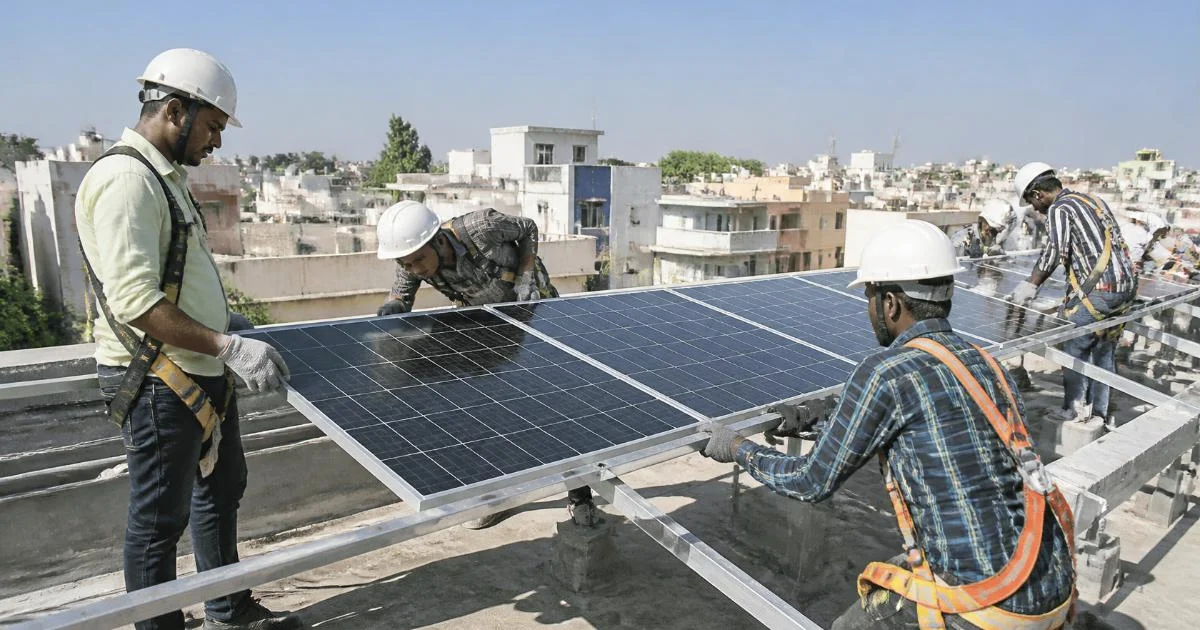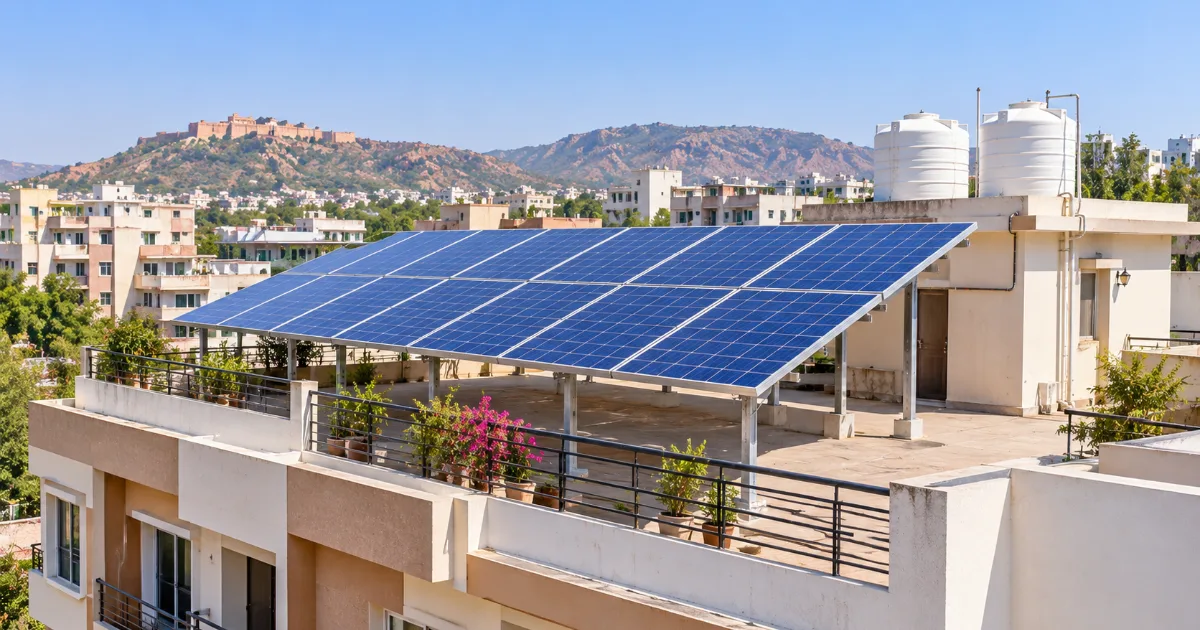
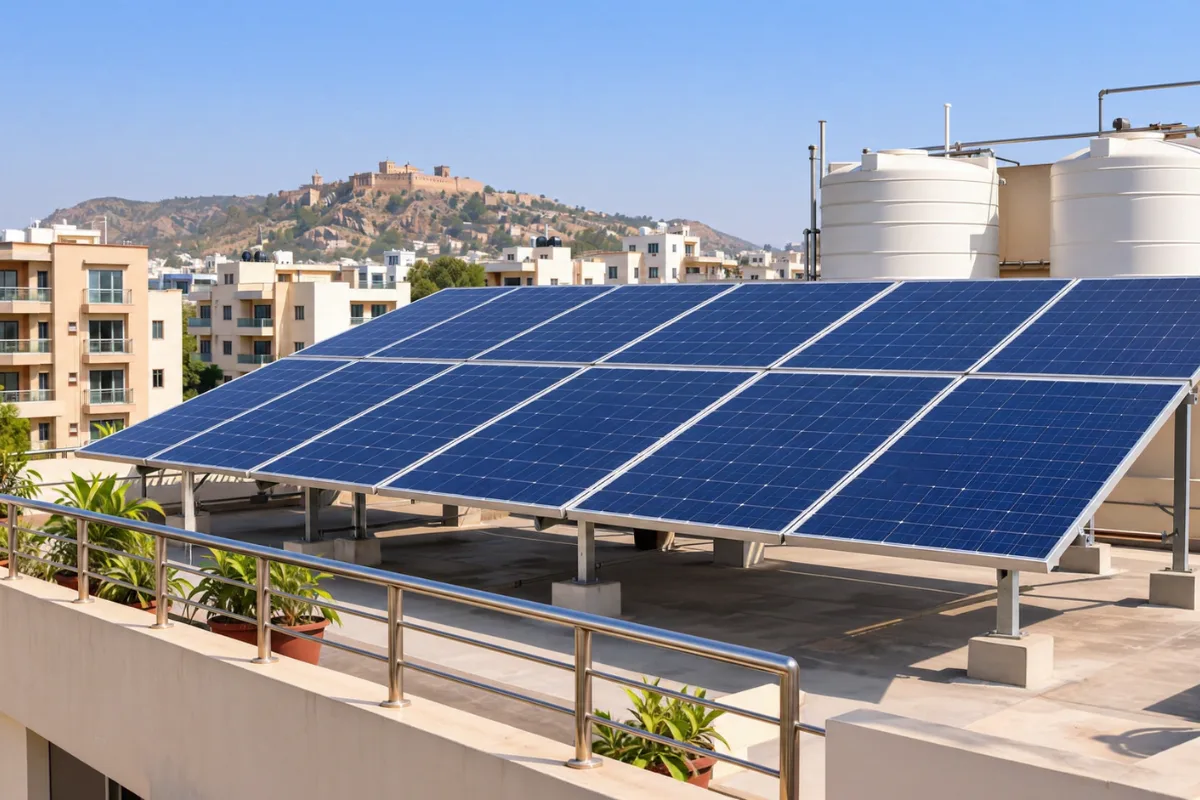
Apartment buildings and housing societies use a lot of electricity for common facilities: lifts, water pumps, corridor and street lighting, gate and security systems, clubhouse and, increasingly, EV charging. A rooftop solar plant on the society’s terrace can cut these common-area bills significantly. This guide explains how residential societies can plan, approve and run a rooftop solar project.
1. What a society solar plant powers
Most society projects connect the solar plant to the common-area electricity connection, so savings reduce the maintenance charges paid by all residents. Some societies also explore options for individual flats where rules and roof space allow, but the common-load model is the simplest.
2. Assessing the roof and load
- Shadow-free area: water tanks, lift rooms, parapets and nearby towers cast shadows; only usable area counts.
- Structural capacity: an engineer should confirm the roof can carry the structure and wind loads.
- Load and bills: study twelve months of common-area bills to size the plant; our system size guide explains the basics.
- Waterproofing: plan mounting so the terrace waterproofing is not damaged.
3. Approvals within the society
- Discuss the proposal in the managing committee and present it in a general body meeting.
- Share the expected cost, savings, payback and maintenance responsibilities transparently.
- Record the resolution and authorise office-bearers to sign with the vendor and DISCOM.
4. Subsidy and net metering
Under the PM Surya Ghar: Muft Bijli Yojana, central financial assistance is available for rooftop solar in Resident Welfare Associations and Group Housing Societies for common facilities, including EV charging, subject to capacity limits and conditions. Check the current rates and procedure on the national portal before planning. The plant connects to the grid through net metering with the DISCOM; see our guide to the net metering process in Rajasthan.
5. Financing options
- Society funds: using the sinking or corpus fund, if bye-laws allow.
- Special contribution: a one-time contribution from members.
- Loans: bank loans for solar; see how to finance rooftop solar.
- Third-party models: where available, a developer may own the plant and sell power under an agreement.
6. Choosing a vendor
- Empanelment under the national scheme where subsidy is sought.
- Panel and inverter makes, warranties and approved lists.
- Design drawings, structural details and earthing and lightning protection.
- Performance guarantee, monitoring and AMC terms.
7. Running the plant
Appoint a committee member to watch the monitoring app, track generation against expectations and coordinate cleaning and AMC visits. Share a simple monthly report with residents so everyone sees the savings.
Frequently asked questions
Can a housing society get a solar subsidy?
Yes, central financial assistance is available for RWAs and group housing societies for common facilities under PM Surya Ghar, subject to limits and conditions on the national portal.
Who benefits from the savings?
When the plant is connected to the common-area meter, savings reduce common electricity bills, which benefits all members through lower maintenance charges.
Will solar panels damage the terrace?
Not if mounting is designed properly with attention to waterproofing and drainage.
Sources
Planning solar for your society? Contact ATTPL Solar.